
Video storytelling does not require expensive gear. I made a short film with decent shots and clean audio, but nobody watched past the first minute. Good production does not equal a good story.
If you are reading this, you probably have a camera. Maybe your phone, a secondhand DSLR, or that $300 mirrorless you saved for. You know how to hit record. But how do you make people care what they are watching?
I have been there. After years of making videos that worked and plenty that did not, here is what I know about telling a story on screen. No film school required.
What Makes a Video Story Work
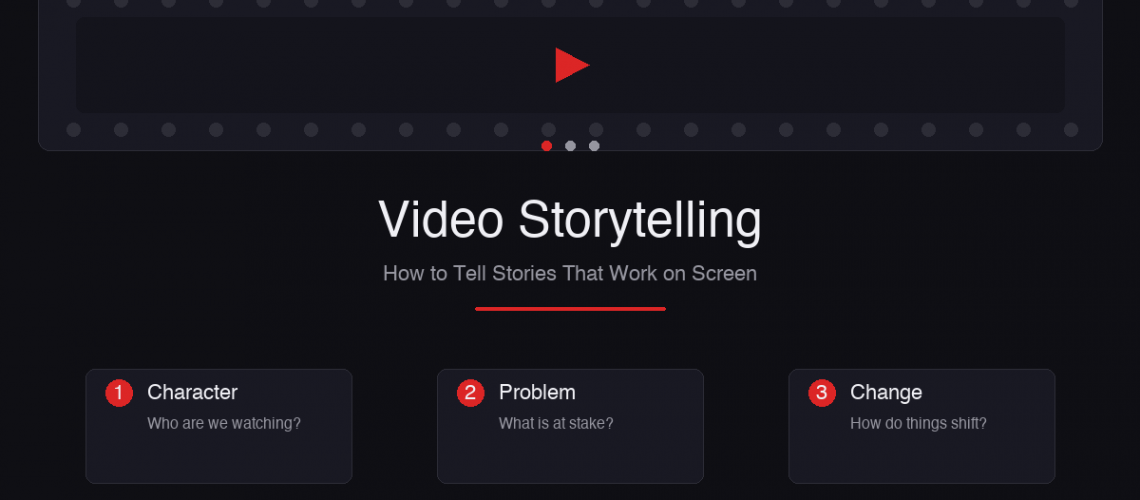
Every story needs three things: a character you can follow, a problem that matters to that character, and some kind of change by the end. Miss any one and the video feels flat even if the production quality is high.
I learned this the hard way shooting a sizzle reel for a local coffee roaster. Great footage. Beautiful slow-motion pouring shots. Crisp audio of beans grinding. But there was no person in the frame. No reason to care. The client loved the look but viewers scrolled past it.
Think about the last video that kept you watching. Chances are you were watching a specific person deal with a specific situation, not a montage of pretty shots. Some of the most powerful storytelling I have seen came from a single person talking into a phone camera in a messy apartment.
Start With the Problem, Not the Gear
When I plan a video, I write one sentence first. What is the problem the main character is trying to solve? If I cannot answer that in a single sentence, I keep thinking until I can. This applies whether you are making a product video, a YouTube vlog, or a short film.
The problem does not have to be dramatic. It just has to be real. “She wanted to learn how to bake sourdough” is a problem. “She felt disconnected from her grandmother and decided to learn her bread recipe” is a better one. Specific wins every time.
Here is a test I use. After I write that one sentence, I ask myself: would a stranger care about this? If the answer is no, I dig deeper. Usually that means getting more specific about what is at stake. You do not need a $10,000 camera to create dramatic tension. You just need to be honest about what matters to the person in your video.
The Three Shot Rule for B Roll
B-roll is where beginners overcomplicate things. You do not need twenty different angles. You need three: a wide shot that shows where we are, a medium shot that shows what someone is doing, and a close-up that shows how they feel about it.
I picked this up watching Casey Neistat, who built a career on exactly this formula. Wide of him walking down the street. Medium of him talking to camera. Close-up of whatever he is reacting to. No crew. No lighting kit. Just three shots cut together.
When I stopped trying to capture everything and started thinking in threes, my edits got faster and my videos got better. Try it on your next project.
Let Silence Do Some of the Work
Beginners fill every second with sound. Music under every frame. Voiceover explaining everything. Sound effects on every transition. It is exhausting to watch. The best storytellers know when to pull back.
A moment of quiet before someone speaks. A few seconds of room tone before the action starts. A held shot with no music. Johnny Harris often lets a map animation play with just his voice. Those moments land hardest because the viewer is not being told what to feel. They are being invited to feel it.
Next time you edit, try muting the music track and see if a section still works. If it does, you might not need the music at all. That is a trust exercise between you and your viewer.
End With a Point, Not a Fade Out
A video that fades out without a conclusion leaves the viewer hanging. Even a sixty-second TikTok needs to land somewhere. The ending is where the story earns its keep.
Give them a payoff. It does not have to be a Hollywood ending. It can be a realization, a question, or a quiet acknowledgment that things are different now than they were at the start. I end every video by asking myself: what is one thing I want the viewer to take away? If I cannot articulate that, the video is not finished.
The videos that performed best on my channel ended with a specific takeaway, not a generic sign-off. That is what makes people come back.
Frequently Asked Questions
Do I need a script to tell a visual story?
Not a word-for-word script, but you need an outline. Know your beginning, middle, and end before you start shooting. The most common failure I see in beginner videos is a rambling middle section with no direction.
What if I am the only person in my video?
Talking head videos can still tell a story. The key is specificity in your words and b-roll that illustrates what you describe. If you made a mistake on a shoot, show the footage and explain what went wrong. That is a story.
How long should a video story be?
As long as it needs to be and no longer. Some of the most effective stories I have seen are under ninety seconds. Cut everything that does not serve the story.
What is the most important skill for video storytelling?
Empathy. The ability to ask yourself: will a stranger care about this? And being honest enough to answer when the answer is no. Technical skills can be learned in a weekend. Empathy takes practice.
Can I tell a good story with just my phone?
Absolutely. The most powerful video stories I have seen in the last year were shot on phones. A phone forces you to focus on what matters: the subject, the moment, the emotion. Gear does not tell stories. People do.
How do I know if my story is working?
Show it to someone who will be honest with you. Watch their face while they watch. If they lean in, it is working. If they check their phone, you lost them. Then ask what they felt at the end. If they cannot answer, the story is not clear.
Start Your Next Video With a Story
You do not need better gear or more experience. The next video you make can tell a real story. Pick one person, give them one problem, show us the change, and end with a point.
If you want to go deeper, check out how to develop your own inspirational short film or how to shoot with just your phone.