
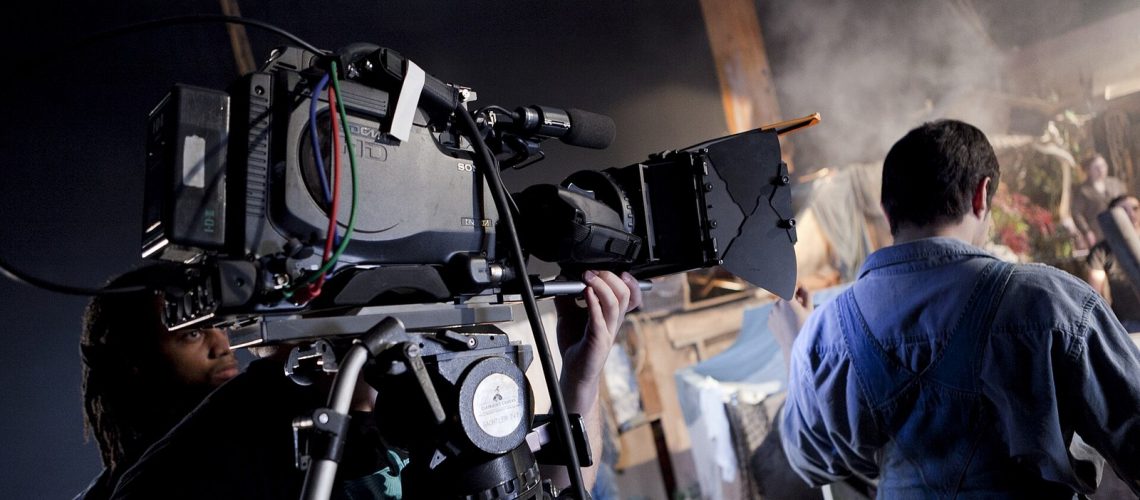
Camera Angles in Film: What Each One Does
Camera angles in film decide how a viewer reads a character, a relationship, and the room around them. Most beginners collect angles like Pokémon cards and then wonder why the cut feels random. The angle itself is not the trick. Matching the angle to what the scene needs is the trick, and that is what I want to hand you here: eight angles, what each one signals, when it backfires, and a shot list you can shoot alone in half an hour.
Key Takeaways
| Aspect | Key Takeaway |
|---|---|
| Start With the Beat | Decide what the audience should feel before you decide where the camera goes. |
| Angle vs. Shot Size | Angle is where the camera points. Shot size is how much of the subject fills the frame. They are separate choices. |
| Eye Level | Direct and familiar. The default for dialogue, and the reason flat coverage feels flat. |
| High and Low | They nudge perceived power, but performance and context can flip the reading. The angle is a cue, not a verdict. |
| Dutch Tilt | Powerful for unease, embarrassing as decoration. Motivate it or skip it. |
| Coverage | One camera is enough. Shoot the same action from three planned positions and choose in the edit. |
Angle, camera height, shot size, and movement are not the same thing
Camera angles in film get muddled because four different choices travel under one name. Angle is the direction the camera points relative to the subject. Camera height is where the lens sits. Shot size is how much of the subject fills the frame. Framing is how you arrange everything inside the rectangle. Movement is whether the camera travels, pans, or zooms.
You can combine them any way you like. A medium shot can be eye level or low angle. A close-up can be dead straight or tilted. A wide shot can sit on the floor or hover over the room. The mistake is treating “low angle” and “close-up” as the same tool, because then you stop choosing and start decorating.
Movement is its own decision. A tracking shot travels with a subject, a dolly moves through space, a zoom changes focal length without moving the camera at all. None of that automatically makes a shot high, low, or level.
For this article I am sticking to the five true angles (eye level, high, low, Dutch tilt, overhead) plus the two framings that beginners confuse with angles (over-the-shoulder and point of view), and then shot size as the layer underneath all of it.
Eye level, high angle, and low angle change how power reads
Eye level: direct and familiar
An eye-level shot puts the lens around the subject’s eye height. It reads as straightforward, like you are meeting the character on equal terms. Richard Linklater’s Before Sunrise leans on near-eye-level framing for Jesse and Celine because the film wants you listening to them, not judging them.
Use it for dialogue, interviews, and any scene where the performance is the event. It backfires when it is the only angle you own. Ninety minutes of eye level is flat, not neutral, and the audience stops feeling the shifts in a scene because there is nothing to shift against.
High angle: exposed, not automatically weak
A high-angle shot looks down on the subject. It can make a person look exposed, isolated, or small inside their environment, and it can also simply explain the geography of a room. Hitchcock uses a high view of Arbogast on the stairs in Psycho so you can see the space and his sudden helplessness in the same frame.
Reach for a high angle when the surroundings matter, or when the audience needs the floor plan of a moment. It backfires the second you assume looking down equals powerless. Put a confident performance under a high angle, or give the character a clear tactical advantage, and the shot reads as observation instead of judgment.
Low angle: presence and scale
A low-angle shot looks up. It adds weight to a character, a doorway, a doorway’s worth of bad news. Christopher Nolan’s Batman coverage in The Dark Knight uses low views to make the suit and the silhouette feel like something the room has to reckon with.
Use it to give someone visual mass, or to make an object or a threshold feel like an obstacle. It backfires when the lens stretches the face into a caricature, when the ceiling eats half the frame, or when a nervous performance is supposed to read as nervous. Angle and acting have to agree.
Dutch tilts and overhead views change the whole frame
Dutch tilt: tension with a visible seam
A Dutch angle (or Dutch tilt) rolls the camera so the horizon slants. The frame feels unstable, wrong, slightly seasick. Carol Reed’s The Third Man is the textbook case, using tilted frames to make postwar Vienna feel like it has come loose from its moorings.
Use it when the scene’s mood or a character’s inner state earns it. It backfires as decoration. Viewers notice a slanted frame instantly, and if the story gives them no reason for the tilt, they start watching the camera instead of the scene. Calm moments almost always want a level frame.
Overhead and bird’s-eye: reveal the layout
An overhead shot looks straight down. A bird’s-eye view is that same top-down perspective pushed wider, useful for patterns, traffic, crowds, and the geometry of a fight. Quentin Tarantino goes overhead during the House of Blue Leaves sequence in Kill Bill: Vol. 1 so you can read the shifting arrangement of bodies in the room.
Use it to show where people are, what they are moving around, or how a space is laid out. It backfires when the frame is busy, or when the angle hides the faces you actually need. An aerial shot is a different animal: high above a location, usually showing landscape or city, not looking straight down at a small action.
Over-the-shoulder and point of view guide attention
Over-the-shoulder: connect two people
An over-the-shoulder shot frames one character past the shoulder of another. It puts the viewer inside a conversation while keeping both people in the scene. The deposition scenes in David Fincher’s The Social Network run on this kind of conversational coverage, keeping attention darting between the speaker and the listener.
Use it when the relationship or the reaction matters as much as the line. It backfires when the foreground shoulder eats half the subject, or when the reverse shot flips screen direction and the conversation suddenly feels like two people in different rooms.
Point of view: let the audience see through a character
A point-of-view shot shows what a character sees from where they stand. Robert Montgomery’s Lady in the Lake is the famous extreme, a film built almost entirely around a first-person camera.
Use POV for a discovery, a search, or the limits of what a character knows. It backfires when the audience cannot tell whose eyes they are borrowing, or when the shot reveals something the character could not possibly see. Establish the character first, then hand over the view.
Wide and close framing control intimacy
Wide and close are shot sizes, not angles, but they do the emotional work people expect angles to do. A wide shot shows the world and puts a character inside it. A close-up removes the world and makes a small reaction impossible to ignore. Sergio Leone’s final duel in The Good, the Bad and the Ugly cuts between vast landscape and tight faces until the space itself becomes the tension.
Go wide for distance, isolation, entrances, and the relationship between a person and a room. Go close when a glance, a hesitation, or a decision is the scene. A wide shot fails when the important action is too small to read. A close-up fails when the performance needs room or the audience has not been given enough context to care.
Pair either size with any angle. That is the whole point: framing controls intimacy, camera position controls perspective, and you get to choose both.
Eight camera choices, side by side
| Angle or framing | Emotional effect | Best use case | Risk |
|---|---|---|---|
| Eye level | Direct, familiar | Dialogue and neutral observation | Feels flat if it is the only angle |
| Low angle | Presence, scale | Emphasizing a character or object | Exaggerates faces and overstates power |
| High angle | Exposure, overview | Vulnerability or room geography | Does not automatically mean weakness |
| Dutch tilt | Unease, instability | A motivated moment of disorientation | Reads as decoration when unmotivated |
| Overhead / bird’s-eye | Pattern, spatial clarity | Movement, positions, group geometry | Buries faces and reactions |
| Over-the-shoulder | Connection, shared space | Conversation and reaction shots | Breaks eyelines and screen direction |
| Point of view | Subjective, immediate | Revealing what a character sees | Viewer loses track of whose view it is |
| Wide vs. close | Distance vs. intimacy | Establishing space or reading a reaction | Too much or too little context |
Choose the angle, then protect continuity
Start with one question: what should the audience understand or feel at this exact moment? If the beat is loneliness, show the distance between the character and everything else in the frame. If the beat is a decision, get close enough to watch the face change.
Then test the choice against performance, blocking, and light. An angle built for fear reads as curiosity if the actor looks relaxed. A low angle loses its punch when the background is a cluttered wall. The frame and the performance have to tell the same story, or the audience feels the seam without knowing why.
When you cut between angles, hold the eyelines. If one character looks to frame right, the person they are talking to should look back toward frame left. Keep screen direction stable unless you deliberately cross the line to shake the scene up.
Match framing across cuts too. Moving from a medium shot to a close-up should have a reason: new information, new emphasis, a reaction you could not see before. An angle that adds nothing is visual noise, and noise is what makes beginner edits feel longer than they are. If the cut is where your scene lives, the video editing guides go deeper on pacing.
How to shoot one room with one camera and no crew
Pick a small action with a beginning and an end. You walk in, find an envelope on the table, read it, and decide what to do. You can perform it yourself with a phone or camera on a stable surface. Put the light in one place (the cheap lighting setup guide covers the basics), lock exposure and focus, and repeat the same action at the same pace every time.
- Shoot the master first. Frame the whole room at eye level. Record the action from entering to leaving so you have a continuous version to build around.
- Move in for the performance. Same action, medium eye-level, waist up. Repeat the gestures at the same speed, especially picking up and setting down the envelope.
- Add one motivated detail. A close-up of the hand opening the envelope, or an over-the-shoulder view of the page. Keep the hand movement identical to the wider take, or the cut will betray you.
Shooting alone changes the workflow more than the gear. Start recording, step into frame, hold still for a beat before and after the action, then stop. Those handles are what make the edit possible. If you are working with a phone, the smartphone filmmaking guide covers the settings side, and the DIY filmmaking section has more of these solo workflows.
A four-angle shot list you can run in 30 minutes
Same envelope scene, one or two takes per setup, timer running. Spend the time making each frame readable instead of adding angles to fill a list.
- Minutes 0 to 7, wide master. Eye level, whole room, complete action. Check that the doorway, the table, and the envelope are all visible.
- Minutes 7 to 14, medium reaction. Eye level, waist up. Same action, and leave a beat after you read the page so the edit has somewhere to land.
- Minutes 14 to 21, over-the-shoulder detail. Frame the envelope past your shoulder. Make sure the writing or the gesture is legible at this size.
- Minutes 21 to 30, low-angle close-up. Camera below face level for the moment you decide what to do. Use the low angle only if that decision is supposed to carry weight.
Review the footage before you move a single piece of furniture or touch the light. If an angle adds no information and no feeling, cut it. Three angles that work beat eight that merely exist, and that habit is what separates a video that holds attention from one that just fills time.
Frequently Asked Questions
Can I mix eye-level and Dutch-angle shots in one scene?
Yes, and the shift itself can carry meaning. A level frame that tilts as a character’s confidence breaks is doing work. Make the change motivated by the scene, or the audience reads it as a camera mistake.
How do I avoid shaky footage without a gimbal?
Put the camera on a stable table, shelf, or stack of books and leave the shot fixed when nothing needs to move. If you have to move while filming, shorten the move, soften your knees, and rehearse the path once before you record.
Should I use digital zoom for a close-up on my phone?
Move closer when the room allows it. Digital zoom softens the image and flattens the relationship between subject and background, while walking in changes both the framing and the perspective at once.
How do I get a safe overhead shot by myself?
Brace the camera on something stable above the action, like a shelf that can genuinely hold the weight, and keep it away from the edge. If you cannot place it securely, shoot from a high corner of the room instead of gambling on a falling phone.
Do I need more than one camera for coverage?
No. One camera and three planned positions gives you a scene. Extra cameras save time on set, but they add matching problems in the edit, and matching exposure across bodies is harder than repeating an action three times.
Go shoot one scene with three angles
Camera angles in film are not a menu of effects. They are decisions about power, intimacy, space, and whose point of view the audience is borrowing. Choose each one for a reason, keep the eyelines clean, and let the performance and the frame agree.
Now shoot one short scene with three angles only: a wide master, a medium performance shot, and one close detail. Lock the camera down, review the cuts, and watch what the angle actually does to how you feel about the character. That one exercise will teach you more than another hour of watching shot breakdowns.