
The Insta360 Luna Ultra is a new gimbal camera that challenges DJI with 8K30 video and dual Leica lenses.
| Aspect | Key Takeaway |
|---|---|
| 8K30 Video | Crisp, high-framerate footage with room to punch in during post without losing 4K delivery quality. |
| Dual Leica Lenses | 1-inch + 1/1.3-inch CMOS sensors give dual-focal coverage without swapping hardware. |
| Detachable OLED Touchscreen | 2-inch wireless remote display — frame and monitor from anywhere, not just the gimbal handle. |
| Triple AI Chip Architecture | Real-time subject tracking, auto-framing, and gesture control for solo filmmakers. |
| Price & Market Position | $769 undercuts DJI’s premium offerings, timed perfectly with DJI’s US regulatory headwinds. |
The gimbal camera market has been a two-player game for a while now, with DJI’s Osmo Pocket line sitting comfortably at the top and Insta360 nipping at their heels from below. But comfortable just got uncomfortable.
Insta360 just dropped the Luna Ultra, and calling it a “spec bump” would be like calling a RED Komodo a webcam. This is a full-on flagship play — 8K30 video, dual Leica-engineered lenses, triple AI chip architecture, and a detachable 2-inch OLED touchscreen that doubles as a wireless remote. At $769, it’s priced to compete directly with DJI’s premium offerings. And here’s the thing: DJI is facing serious regulatory headwinds in the US market right now. The timing couldn’t be better for Insta360 to strike.
Let’s break down what this thing actually does for filmmakers, content creators, and anyone who needs to move fast and shoot clean.
Insta360 Luna Ultra Dual-Sensor Design: Why Two Lenses Matter
The Luna Ultra runs a dual-sensor setup: a 1-inch CMOS sensor paired with a 1/1.3-inch CMOS sensor. On paper, that 1-inch sensor is the headline — it’s the same class of sensor you’d find in high-end compact cameras, offering significantly better low-light performance and dynamic range than the smaller sensors in most pocket gimbals.
The 1/1.3-inch sensor handles the secondary wide-angle lens, giving you dual-focal coverage without swapping hardware. For run-and-gun shooters, that means you can punch in for a tight interview shot and pull out for a wide establishing shot from the same camera, in the same take. No lens changes. No second body. Just one gimbal that gives you two looks.
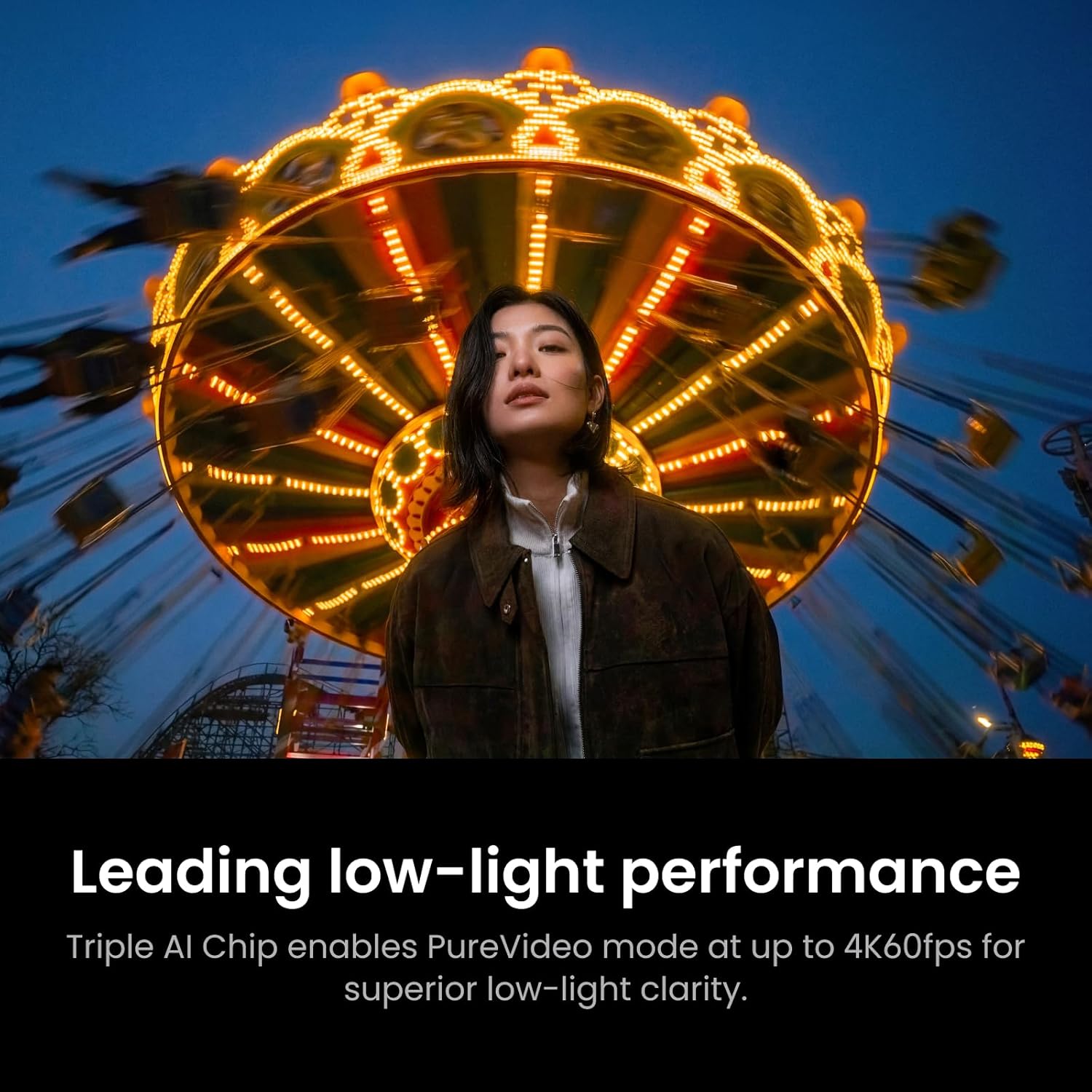
Insta360 claims the “triple AI chip” architecture handles the compute load for both sensors simultaneously, with a specific focus on low-light noise reduction and subject separation. If it delivers, this could be the first pocket gimbal that doesn’t fall apart the moment the sun goes down.
Insta360 Luna Ultra: 8K30, 4K120, and Why Frame Rates Matter More Than Resolution
The Luna Ultra records 8K at 30fps with Dolby Vision. Great for social media bragging rights, but realistically, your 2026 workflow probably doesn’t need 8K delivery. What 8K gives you is freedom in post — you can punch in, reframe, stabilize, and still deliver clean 4K without resolution loss. If you’re shooting interviews or commercial work where you need to reframe in the edit, that 8K source is a lifesaver.
The more immediately useful figure is 4K120. Slow-motion at 4K resolution means buttery smooth 120fps clips that hold up on a 4K timeline. No downscaling, no soft crops. For action sports, product reveals, or cinematic transitions, this is where the Luna Ultra earns its keep.
You also get 4K60 PureVideo mode, which appears to be Insta360’s frame-interpolation and noise-reduction pipeline for delivering cleaner standard frame-rate footage — useful for fast-moving documentary work where 30fps introduces too much motion blur. For anyone still building out their kit on a budget, check out our roundup of filmmaking gear under $100 for affordable ways to improve your production value.
The Leica Lens System: Not Just a Name
Leica has been licensing its lens tech to smartphone manufacturers for years, but the partnership with Insta360 on the Luna Ultra feels more serious than the average badge-engineering deal.
The pro-grade telephoto lens delivers 12x digital zoom and 6x lossless zoom, with Leica-engineered color profiles baked into the camera. That’s significant because Leica glass on the Insta360 Luna Ultra has a particular look — warm, contrasty, with that subtle micro-contrast that makes images feel three-dimensional. Getting those profiles as an in-camera option means you can shoot with a finished look instead of spending hours in DaVinci Resolve trying to recreate it in post.
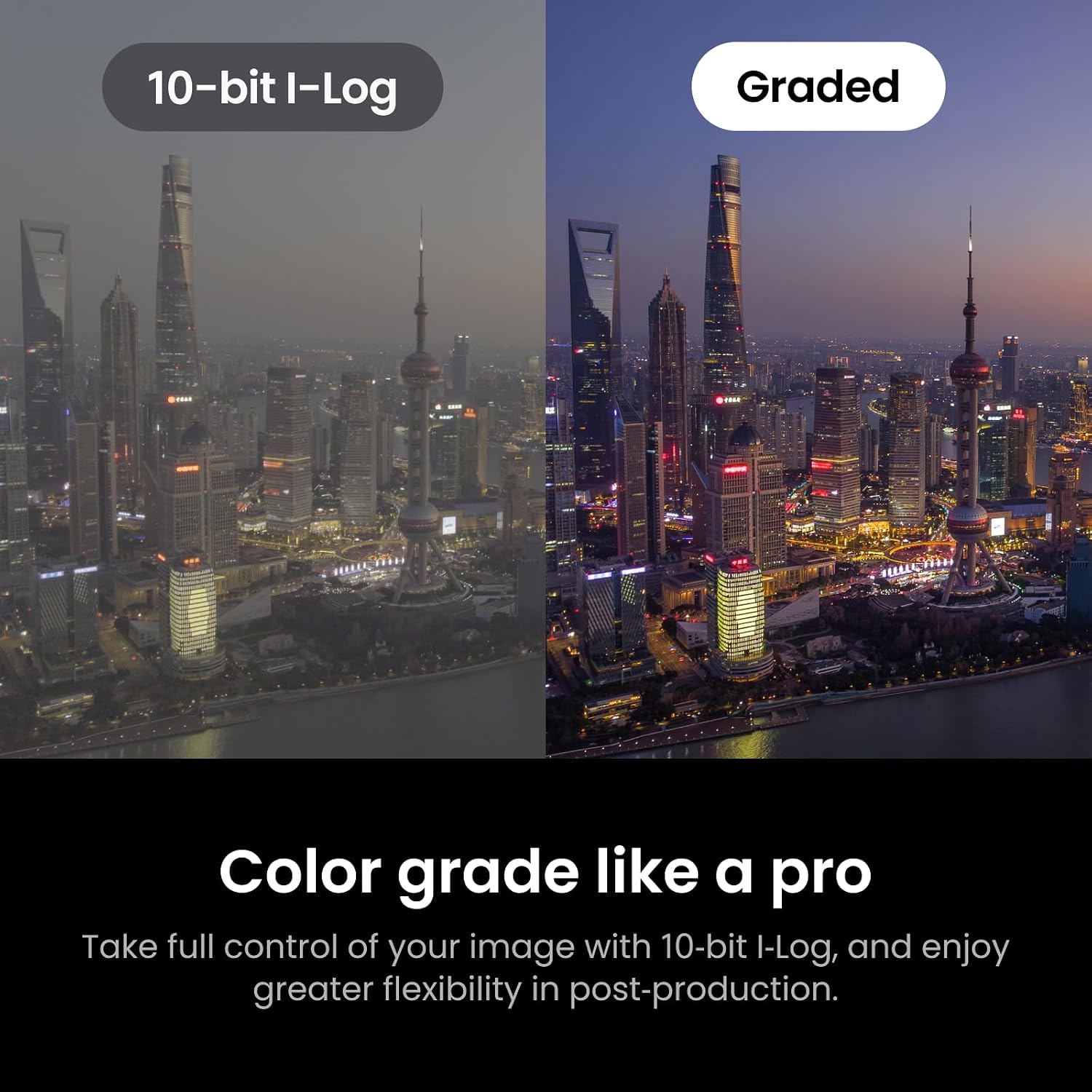
The camera also records in 10-bit I-Log with up to 14 stops of dynamic range. That’s the real filmmaker headline here. 10-bit color means you can grade aggressively without banding, and 14 stops of DR puts it in the same conversation as mirrorless cameras that cost three times as much. For a gimbal camera that fits in a jacket pocket, that’s genuinely impressive.
Detachable Touchscreen: More Than a Gimmick
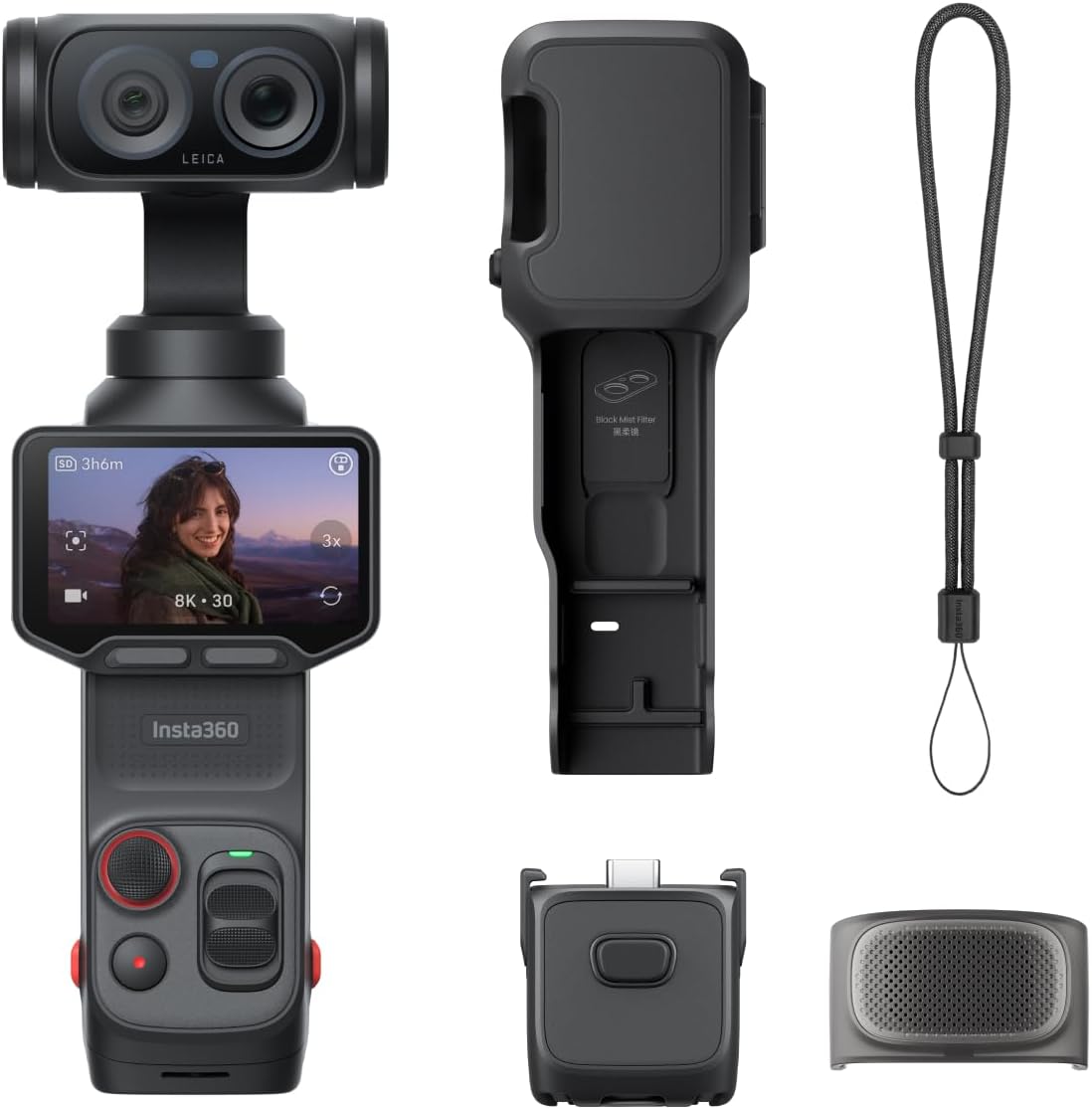
The 2-inch OLED touchscreen detaches from the gimbal body and functions as a wireless remote with HD video signal transmission up to 65 feet. This is one of those features that sounds like a bullet point until you’re on an actual shoot.
Want to frame yourself for a solo interview? Pop the screen off, mount it on a light stand, and compose yourself from across the room. Shooting a cooking video over a counter? Run the gimbal on the counter and keep the screen in your hand. B-Roll on a jib arm? Same deal. Pair this with a solid video lighting setup and you’ve got a one-person production rig that punches way above its weight.
The built-in wireless microphone in the screen component also records clear dialogue at distance, and it pairs directly with the Mic Pro transmitter. That means you’re getting sync-ready audio without a separate recorder in your pocket. For a one-person content operation, that’s a huge simplification of your kit.
The Gimbal Wars Get Interesting
DJI has dominated this space with the Osmo Pocket and Osmo Action lines for years. But DJI is currently navigating significant US regulatory challenges — restrictions that make their products harder to sell, harder to service, and less appealing to American customers who want confidence in ongoing software support and warranty coverage.
Insta360 is not a small company. They’ve been quietly building an impressive ecosystem of 360 cameras, action cams, and gimbals. The Luna Ultra feels like their statement of intent: we’re not the underdog anymore. No Film School covered the launch in detail and came away impressed with the feature set.
At $769 for the standard combo on Amazon, the Luna Ultra undercuts DJI’s premium offerings while offering a comparable or superior spec sheet. The dual-sensor design, Leica color science, detachable screen, and AI tracking features stack up well against anything in the Osmo Pocket lineup. If you’re starting fresh with gimbal gear, there’s a strong argument to go with Insta360 right now.
Verdict: Who Is This For?
The Insta360 Luna Ultra is for three types of shooter:
- Solo content creators who need one device that does gimbal work, audio capture, and remote monitoring without a suitcase full of accessories.
- Action and travel filmmakers who shoot in varied conditions and need 4K120 slow-motion, Leica color profiles, and AI tracking that doesn’t reacquire every time the subject turns around.
- Documentary and event shooters who want a B-camera that shoots 10-bit I-Log, has dual focal lengths available instantly, and can be operated wirelessly from 65 feet away.
It is not a cinema camera replacement. Nothing in this class is. But as a dedicated gimbal camera that punches well above its weight class on image quality and AI-assisted capture, the Luna Ultra is the most interesting thing Insta360 has released in years.
The real question is whether DJI responds. And that answer will tell us a lot about where the gimbal market is headed. Whether you’re building your kit from scratch or just looking to improve your video SEO and discoverability, the Luna Ultra deserves a serious look.
Full specs: 8K30 Dolby Vision video, 4K120 slow-motion, 4K60 PureVideo, dual Leica-engineered lenses (1" + 1/1.3" CMOS), triple AI chip, detachable 2" OLED touchscreen (65ft wireless range), 3-axis stabilization, AI subject tracking, 10-bit I-Log, 14 stops dynamic range, built-in wireless microphone, $769 standard combo price.
Disclaimer: Film and Learning is an independent publication. We have no affiliation with Insta360 or DJI. Specs are based on manufacturer announcements and may differ from shipping units.